
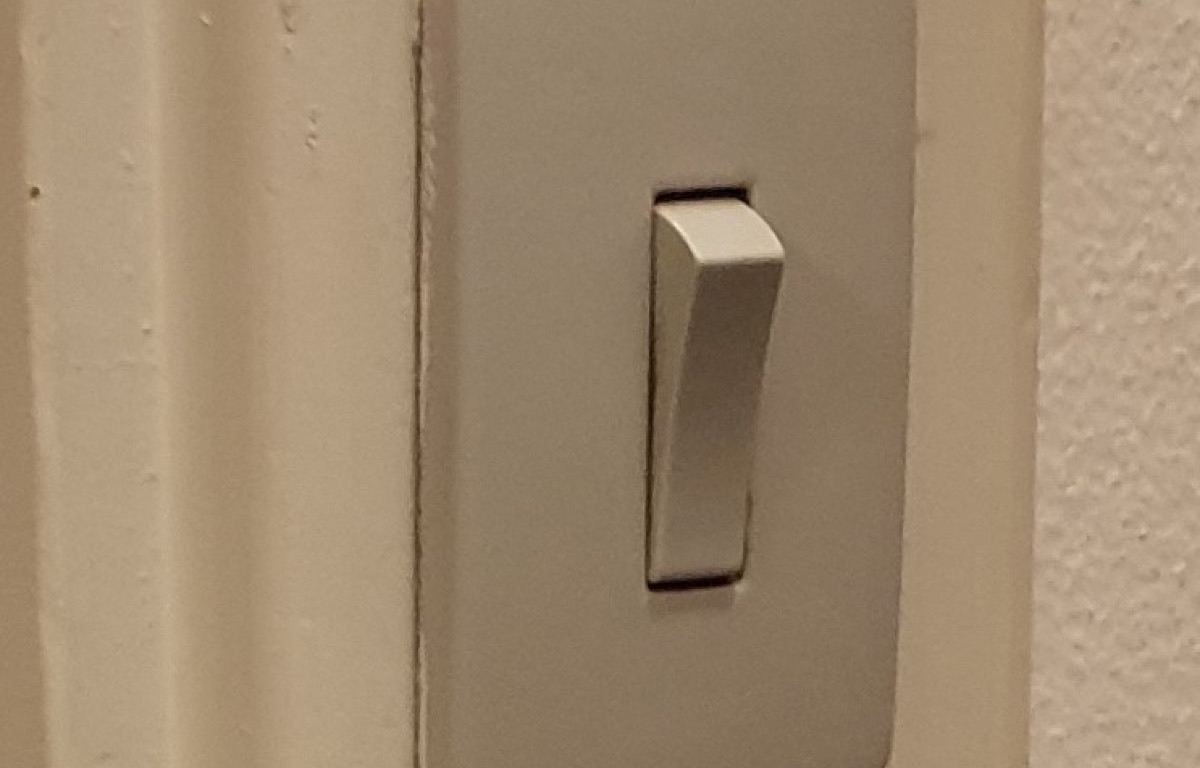

Stop using the switch if it is hot, buzzing, sparking, discolored or smells burnt. Report it promptly and never remove the faceplate, tighten terminals or test it with a metal tool.
Electrical switches can carry current without making any sound, so a warm faceplate deserves attention even when the light still works. The temperature may be caused by a loose connection, an overloaded circuit, a failing switch or heat from a nearby fitting. A renter does not need to identify which one before reporting it.
Start with observation. Do not open the faceplate, spray cleaner into the switch or keep toggling it to see whether the warmth changes. For wet electrical symptoms, see the water-under-the-sink safety guidance.
If the switch is hot to touch, smoking, sparking, crackling or producing a burning smell, stop using it, keep clear and use the urgent electrical or emergency route. Do not touch it with wet hands.
Describe what you notice
From a dry position, note whether the switch is slightly warm, hot, buzzing, crackling or discolored. Check whether the light flickers, whether the switch plate is loose and whether the condition appears when one lamp or several appliances are running.
Check the faceplate for scorch marks, gaps, cracks or melted plastic without touching the terminals.
Record whether the warmth appears immediately, after the light has run for a while or only with another appliance.
Do not test a switch near a damp wall, wet floor or leaking fixture.
Know when to stop using it
Stop using the switch if it is hot, makes a new noise, smells burnt, sparks, flickers the light or has a loose or damaged plate. If another control operates the same light safely, leave the warm switch alone. Do not use tape as a repair or place furniture over it.
The US Consumer Product Safety Commission's home electrical checklist says unusually warm outlets or switches may indicate unsafe wiring and should be checked by an electrician; it also notes that some dimmer switches can normally become warm (CPSC Home Electrical Safety Checklist). New warmth, heat, noise, odor, flicker or discoloration therefore belongs in a prompt safety report rather than a DIY investigation.
Do not investigate behind the plate
Do not remove the faceplate, tighten a terminal, insert a tester or replace the switch yourself unless you are authorized and qualified to do so. In a rental, a small cover screw can expose live parts or make it harder for an electrician to see the original condition.
If the circuit breaker has tripped, do not repeatedly reset it. Report what was running, what happened when the breaker tripped and whether there was smell, noise or visible damage.
Send a precise safety report
Tell the landlord or building manager the room, switch location, symptom, timing and whether the light still works. Use the urgent route for heat, smoke, sparks, burning smell, repeated breaker trips or a switch near water.
“The light switch in the [room] feels [warm/hot] after [time] and [buzzes/flickers/has a smell/looks discolored]. The light is [working/not working], and the switch is [dry/near a damp area]. I have stopped using it and have not removed the cover.”
Keep the area clear while you wait
Keep curtains, paper and furniture away from a switch that is heating up. Do not hang a wet cloth nearby or use the switch as a place to rest a key or hook. Keep the report reference and avoid using the circuit until maintenance says it is safe.
For a move-out record, photograph visible discoloration from a safe distance and keep the repair request. The move-out guide collection can help you distinguish an open safety issue from a cosmetic mark.
When warmth becomes urgent
Is a slightly warm switch always dangerous?
Not every warm switch has the same cause, but warmth that is new, increasing or paired with noise, smell, flicker or discoloration should be reported.
Can I tighten the switch cover?
Do not open the faceplate or work on the switch in a rental. Report a loose or cracked cover so maintenance can inspect it safely.
Should I turn off the breaker?
If there is smoke, sparking or immediate danger, leave the area and use the emergency route. Do not enter standing water or reach toward a wet panel.
What if the switch only warms when the heater is on?
Record that timing and stop using the circuit if the switch is hot, smells burnt or behaves unusually. The electrical load needs an assessment.
Treat heat as an electrical stop sign
A warm switch is an electrical observation, not a DIY invitation. Keep the area dry, stop at heat or noise, report the exact pattern and let a qualified person inspect behind the plate. Continue with the full guide library for the next renter check.
These links support specific safety, maintenance or jurisdiction examples in the article. General guidance cannot replace the instructions for the exact appliance, fitting, lease or location.