
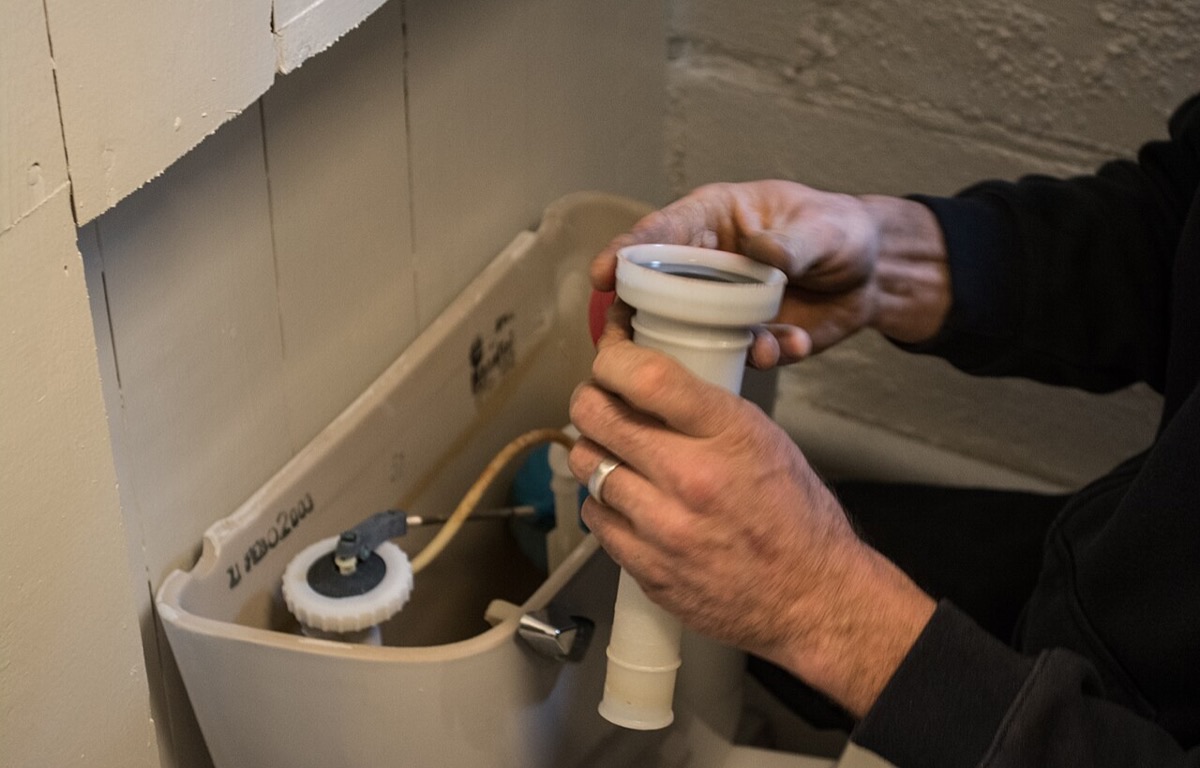

Check whether water is entering the bowl, whether the handle returns fully, and whether the visible shut-off valve is safe to close. Report a continuing flow or hidden cistern rather than replacing internal parts yourself.
A toilet can run for a few seconds after a flush and still be working normally. The concern is a repeated hiss, a thin stream into the bowl, or a cistern that starts refilling when nobody has used it. That wasted water is also a clue that the fill valve, flapper, flush seal or handle mechanism may not be closing properly.
Start with the part you can observe from a dry floor. You do not need to dismantle the cistern to give maintenance a useful diagnosis. For a broader bathroom check, see the kitchen and bathroom guide collection.
If the cistern is concealed behind a panel, the floor is wet, or water is flowing continuously, stop using the toilet and contact the landlord or emergency maintenance route. Do not force a panel or disconnect the supply hose.
Listen to the pattern first
Stand beside the toilet for a full minute after a normal flush. A short refill followed by silence is expected. A constant hiss, a refill that starts by itself, or a trickle that never stops is a repair clue. Note whether the sound changes when you touch the handle, press the flush button or gently lift the cistern lid if it is a normal, removable lid.
Look for a thin stream or ripples entering the bowl after the flush has finished.
Make sure it returns to its normal position without sticking. Do not force a stiff mechanism.
Water around the pan, supply hose or valve is different from an internal running fault and needs prompt attention.
Separate an internal leak from a supply leak
If the floor is dry but the bowl keeps receiving water, the problem is likely inside the cistern or flush mechanism. If water is appearing at the hose, valve, pan base or wall, treat it as an external leak. Dry the area, take a photo and do not tighten the supply connection by force.
EPA WaterSense explains that worn toilet flappers and other internal parts can allow water to leak from the tank into the bowl, while a simple dye test can reveal an internal leak. In a rental, the useful part is the observation: a continuing bowl trickle is enough to report, even if you do not perform the test yourself (US EPA WaterSense: Residential toilets).
Check the visible shut-off valve carefully
If water is flowing continuously and the local shut-off valve is clearly visible, reachable from a dry position and designed to turn by hand, you may close it gently until it stops. Do not use pliers on a seized valve, and do not keep turning after it reaches its stop. If the valve is hidden, corroded or close to electrical equipment, leave it alone and call maintenance.
Closing the valve is a temporary containment step, not a repair. Keep the toilet out of use, put a note on the lid if other people share the home, and tell maintenance whether the bowl was filling, the floor was wet or both.
Why replacing the flapper is not always a renter fix
A flapper, fill valve or button may be inexpensive, but the correct part depends on the cistern design. Removing the lid, changing the chain length or adjusting the float can create a running toilet, a weak flush or an overflow if the mechanism is not compatible. Some toilets also have concealed or manufacturer-specific parts.
Do not add a cleaning tablet to the cistern to solve the noise. Strong chemicals can damage rubber components and can make a later repair harder to assess. If you have already used one, mention the product when you report the problem.
Know when the toilet needs a repair report
Report the toilet if it runs continuously, refills without use, leaks at the base or supply connection, has a cracked cistern or pan, will not flush normally, or needs the handle held down. Use the urgent route for a steady external flow, an overflow risk, sewage on the floor or water near electricity.
Include the timing and location in your message. “The toilet is broken” is less useful than “A thin stream enters the bowl for ten minutes after each flush, and the floor is dry.”
“The bathroom toilet keeps [hissing/refilling/running]. Water is [entering the bowl / appearing at the base / visible at the supply connection]. The floor is [dry/wet], and the handle or button [returns normally/sticks]. I have not removed any parts.”
Keep the bathroom usable while you wait
Keep the area around the toilet dry and leave the cistern accessible for the maintenance visit. Do not wedge the handle, place a heavy object on the lid or keep flushing to test the same symptom. If you closed a clearly safe shut-off valve, record the time and tell maintenance when you report it.
For a move-out record, keep the dated photo and repair reference even if the sound stops. The move-out guide collection can help you keep that note with the rest of the bathroom handover.
Report the water path, not a guessed part
A running toilet needs a pattern before it needs a replacement part. Listen, look for the water path, close only an obvious safe valve if necessary and hand the internal mechanism back to maintenance. Continue with the full guide library for the next practical check.
These links support specific safety, maintenance or jurisdiction examples in the article. General guidance cannot replace the instructions for the exact appliance, fitting, lease or location.