
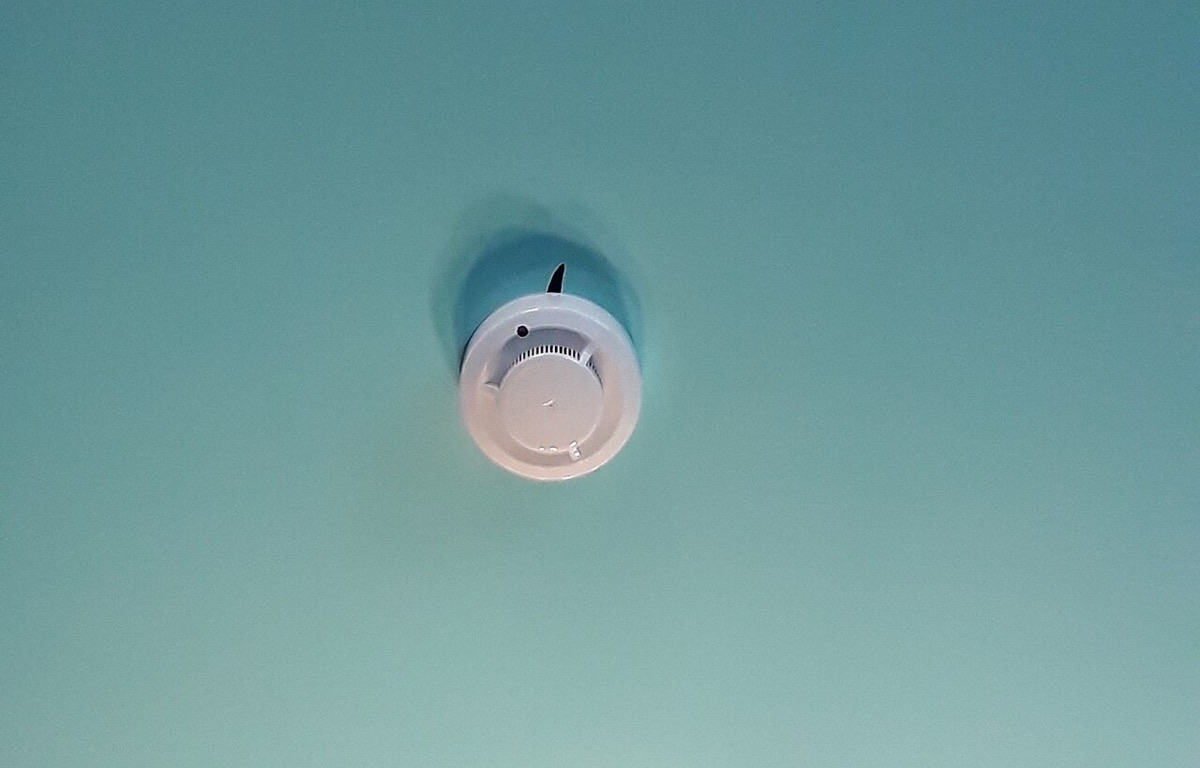
.jpg)
Identify which alarm is sounding, check the battery compartment only if it is designed for tenant access, press the test button, and report a sealed, hard-wired, interconnected or still-chirping alarm to the landlord or building manager.
Smoke alarms are designed to get attention, so the same chirp can feel impossible to ignore at night. The sound may be a low-battery warning, a fault signal or a sign that the alarm has reached the end of its service life. It may also come from a nearby carbon-monoxide alarm or another unit in an interconnected system.
Start by locating the source and checking the instructions on the alarm. Do not remove the alarm from the ceiling, cover it with tape or take out the battery and leave it disabled. The US Fire Administration advises residents to keep working smoke alarms in the home and to test them regularly (US Fire Administration: Smoke alarms).
A repeating loud alarm is different from a single chirp. Check for smoke or fire, leave the property if needed and call emergency services. Do not silence a possible fire by removing the battery.
1. Find the exact alarm
Listen from each room and check whether the sound is a single chirp at regular intervals, a voice warning, a carbon-monoxide alert or a continuous alarm. Interconnected alarms can make it seem as if the sound is coming from the wrong room.
If there is any sign of fire, leave immediately and use the emergency route. Do not spend time troubleshooting the device.
Look for smoke, carbon monoxide, combination, battery-only or hard-wired wording without removing the unit.
Record the interval, voice message, room and whether other alarms sound at the same time.
2. Check a user-accessible battery only when safe
If the alarm has a clearly marked battery door and your tenancy instructions allow replacement, use the correct battery type and follow the label. Press the test button after replacement and wait to see whether the chirp stops. Keep the old battery for disposal according to local guidance.
Do not open a sealed alarm, pull wiring, twist a hard-wired unit from its base or disconnect an interconnected system. If the alarm is high on the ceiling, use a safe step only if the property permits it; never balance on a chair or stretch near a stairwell.
3. Clean only the outside
Dust can affect some alarms, but cleaning is not a substitute for a battery or replacement. With the alarm off only if the instructions permit it, use a soft brush or vacuum brush around the outer vents. Do not spray cleaner, paint the unit, block the openings or insert anything into the sensor.
If the chirp continues after an approved battery change, the alarm may have a fault or may be past its replacement date. Record the model and date printed on the unit, then report it rather than repeating battery changes.
4. Know when maintenance must take over
Report the alarm immediately if it is hard-wired, sealed, interconnected, missing, damaged, loose, past its replacement date or still chirping after the user-accessible check. Also report a detector that is covered by paint, blocked by a fitting or positioned where normal cooking or steam causes repeated nuisance alarms.
Ask the landlord or building manager before changing an alarm's location. Smoke-alarm placement and wiring can be part of the property's fire-safety system, not a tenant decoration choice.
“The [smoke/carbon-monoxide/combination] alarm in the [room] chirps every [interval] / gives a [message]. It is [battery-accessible/sealed/hard-wired/unclear], and the test button [works/does not work]. There is [no smoke or fire / a separate emergency concern]. Please arrange an inspection or replacement.”
5. Keep the alarm active while you wait
Do not remove the battery, cover the alarm or place it in a drawer. If nuisance alarms happen during cooking, use the range hood and keep the alarm clear, but do not disable it permanently. Keep a note of the report reference and the date it was made.
For a move-out inspection, leave all alarms installed and working, and photograph any existing damage or open repair request. The move-out guide collection can help you keep safety checks separate from cosmetic cleaning.
Chirp, alarm or expired unit?
How often should a smoke alarm chirp?
A regular single chirp usually indicates a warning or fault, but the exact pattern depends on the model. Read the label or manual and report uncertainty rather than guessing.
Can I remove the battery at night?
Do not leave the home without a working alarm. If the sound is a continuous alarm, check for fire and use the emergency route. For a single chirp, replace an approved battery or contact maintenance.
Why does the alarm chirp after I changed the battery?
The battery may be the wrong type, the compartment may not be fully closed, or the alarm may have a fault or expired service life. Report it if the sound continues.
Is a smoke alarm the same as a carbon-monoxide alarm?
No. They detect different hazards, although some combination units do both. Read the label and do not assume one device replaces the other.
End with a working alarm
A chirping alarm is a safety signal before it is a maintenance annoyance. Check the source, follow only the user-accessible instructions, keep the device active and report a sealed, wired, damaged or persistent alarm. Continue with the full guide library for the next renter check.
These links support specific safety, maintenance or jurisdiction examples in the article. General guidance cannot replace the instructions for the exact appliance, fitting, lease or location.