
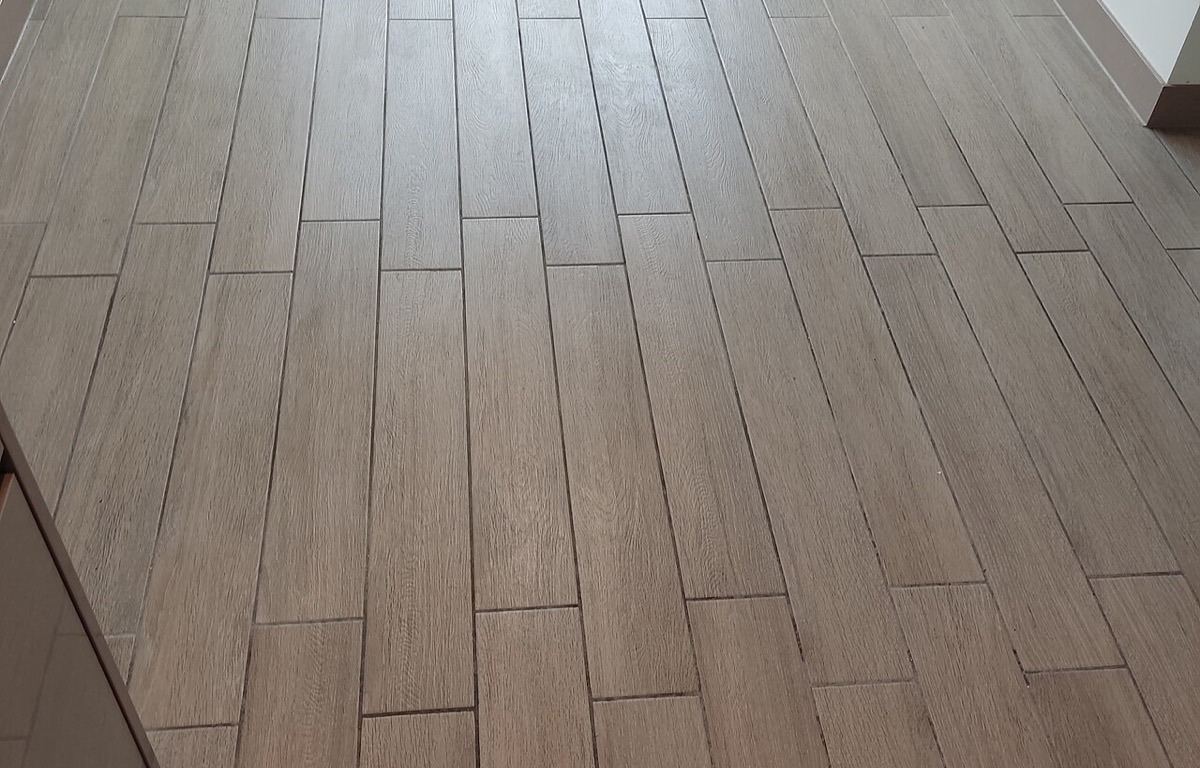

Photograph the mark, remove loose dirt, test a damp cloth in an inconspicuous spot and stop if the sheen, color or texture changes. Do not sand, bleach or recoat a rented floor without permission.
Floors are often judged in bright, empty rooms, so a small scuff can look more serious at move-out than it did under furniture. The important distinction is between material sitting on the surface and damage to the finish itself. Rubber from a shoe or furniture foot may lift with gentle cleaning; a scratch, worn patch or swollen board will not.
Begin with documentation, not a strong cleaner. Different floors react differently to water, alcohol, solvents and abrasive pads. For the rest of a handover, see the move-out guide collection.
Never mix cleaning products, pour liquid into a floor joint or use a melamine sponge on a glossy or unknown finish without a small test. If the floor is lifting, soft, swollen or splintered, stop and report it.
Identify the floor and the mark
Look at the floor in daylight and photograph the whole area plus a close-up. Note whether the mark follows a shoe path, furniture leg or wheel. Check whether it is raised, sticky, lighter than the surrounding floor, or visible only from one angle.
Look for timber grain, a printed laminate pattern, tile joints, vinyl seams or carpet fibers.
Press only lightly with a fingertip. Softness, movement, swelling or a lifted edge is a report signal.
Rubber transfer, tracked dirt and a scratch need different responses.
Start with dry, gentle cleaning
Vacuum or sweep loose grit first. Use a clean, dry microfibre cloth for a light surface mark. For a hard, sealed floor, slightly dampen the cloth with plain water, wring it well and wipe a small section. Dry the area immediately.
Use the flooring instructions or the landlord's approved product if you have them. Apply a product only in the way its label describes, and do not assume that a cleaner suitable for tile is safe for timber, laminate or vinyl.
Test before trying anything stronger
Choose a hidden area near a skirting board or under furniture. Apply the smallest amount of the proposed cleaner to a cloth, not directly to the floor, and wait for the surface to dry. Compare the sheen and color before moving to the visible mark.
Stop if the cloth picks up finish, the floor turns cloudy, the mark spreads, the surface becomes tacky or the color changes. Do not use steel wool, a scouring pad, bleach, acetone, furniture polish or a steam mop on an unknown rented floor.
Know when a scuff is not a cleaning job
Report the floor if a board is swollen, a tile is loose or cracked, vinyl is lifting, carpet is pulled, the finish is worn through, the mark follows a leak, or a chair or appliance has left a dent. A cleaner cannot reverse a moisture or surface failure.
If the mark was present at move-in, compare the inventory and send the dated photos before attempting a cosmetic repair. If it happened during the tenancy, describe the cause honestly and ask what repair method is approved. Do not sand or patch a floor to make the record less visible.
Keep the floor presentable while you wait
Use felt pads under movable furniture, lift rather than drag boxes and keep grit away from entry points. Wipe spills promptly and avoid leaving a wet mat or plant tray on the floor. These are ordinary protective habits, not a substitute for repairing a floor that is already changing.
For your final photos, wait until the floor is dry and the room is empty. Include a wide view so the location is clear, then keep the close-up with your cleaning notes and any repair reference.
Let the dry finish decide the next move
A floor mark deserves a surface diagnosis, not the strongest cleaner in the cupboard. Photograph it, remove loose dirt, test gently and stop as soon as the finish changes. Continue with the full guide library for the next move-out check.