
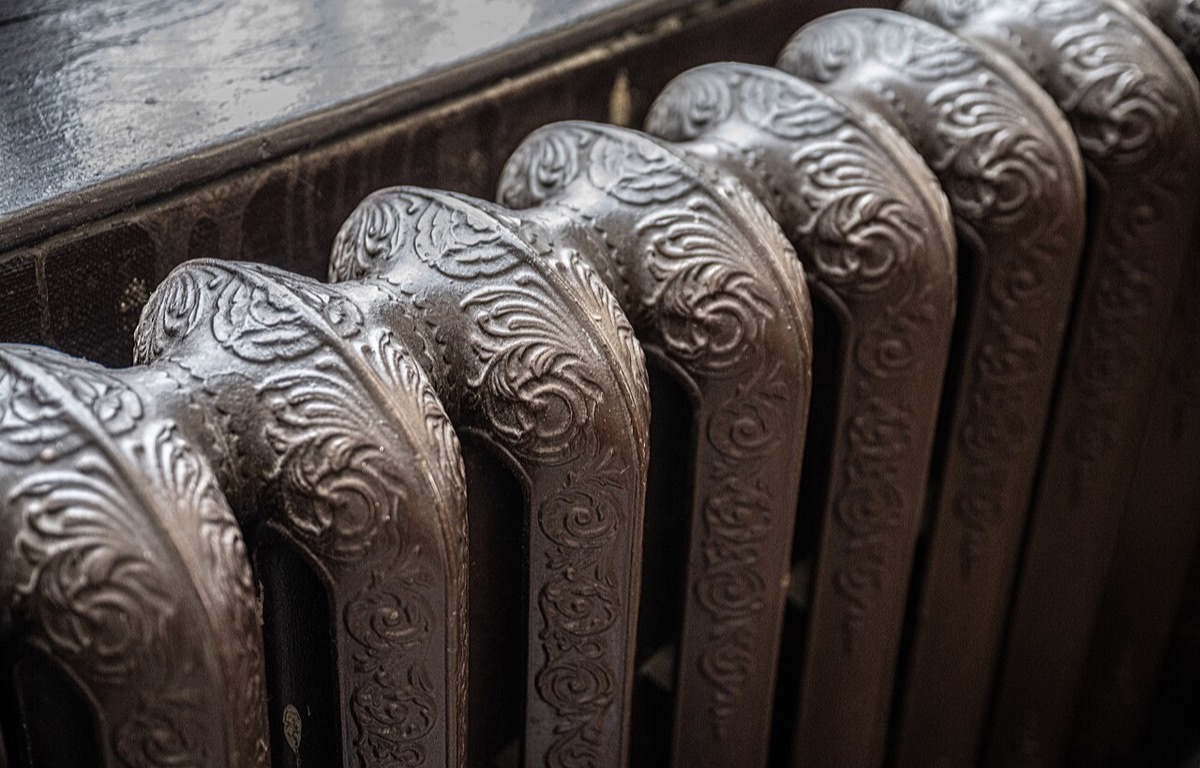

Compare the radiator with others, check the thermostat position and note whether it is cold at the top, bottom or everywhere. Do not bleed a hot or unfamiliar system unless the landlord or building manager explicitly allows it.
Radiators do not all warm in exactly the same way, especially when the heating has just switched on. The useful clue is the pattern after the system has had time to run: cold at the top and warmer below can suggest air, cold all over can suggest a closed valve or no heat reaching the radiator, and a cold bottom with a hot top can suggest restricted circulation or sludge.
In a rental, the first job is not to repair the heating system. It is to describe the symptom clearly and avoid releasing hot water, damaging a valve or changing a shared system's pressure. For other room conditions, browse the damp and noise guide collection.
Do not loosen a valve, bleed screw or pipe fitting while the radiator is hot. If there is a boiler, pressure gauge, leaking valve or shared heating system, use the maintenance route rather than experimenting.
Read the heat pattern
Turn the room thermostat to its normal setting and allow the heating to run through a normal cycle. With the back of your hand, compare the radiator surface carefully without touching valves or bare metal fittings. Note whether the heat is even, top-to-bottom, or absent.
If every radiator is cold, the issue may be the boiler, timer, thermostat or building system rather than one radiator.
Cold at the top with warmth below is different from a radiator that is cold everywhere.
Gurgling, banging or repeated clicking is useful information for maintenance, not an invitation to remove a valve.
Check the normal controls
Look at the room thermostat, heating schedule and radiator control. A thermostatic radiator valve may have numbers or a frost setting; turn it only within its normal range and never force a seized dial. If the control is hidden behind furniture, make sure it is not being pressed or blocked.
Check whether the radiator is obstructed by a sofa, curtain or drying laundry. That can make a room feel cold even when the radiator is working, but it does not explain a leak or a radiator that stays cold at every setting.
Why bleeding is not an automatic renter fix
Bleeding releases trapped air through a small valve at the top of the radiator. Energy Saving Trust describes it as a maintenance task that can improve a radiator with a cold top, but the process can involve hot water, a stuck bleed screw and a system that needs pressure checked afterwards (Energy Saving Trust: How to bleed a radiator).
Ask the landlord or building manager before doing it. Do not bleed a radiator that is hot, leaking, painted over, missing its key, connected to a shared system or inside a property with unclear boiler controls. A small repair can become a water leak or a heating outage if the valve is damaged.
Know when the heating needs maintenance
Report the radiator if it stays cold after a normal heating cycle, several radiators are affected, the valve is stuck, the radiator leaks, the pipework bangs, the boiler pressure is abnormal, or the room cannot reach its usual temperature. Mention the room, control setting, heat pattern and time of day.
“The radiator in the [room] is [cold at the top/cold throughout/hot at the top but cold below] after the heating has run for [time]. Other radiators are [working/also cold]. The control is set to [setting], and I can hear [no sound/gurgling/banging]. I have not opened the bleed valve.”
Keep the room comfortable without hiding the fault
Keep curtains and furniture clear of the radiator, close external doors and windows normally, and use the property's approved heating controls. Do not cover the radiator, dry wet clothes on it, use an unapproved portable heater near curtains, or paint over a damp or leaking area.
If the room is cold and damp, record both symptoms. A heating problem can contribute to condensation, but condensation can also come from ventilation or a building defect. The window-condensation guide can help you describe that second symptom without guessing at the cause.
Before anyone opens a radiator valve
Does a cold top always mean the radiator needs bleeding?
No. It can suggest trapped air, but a closed valve, heating schedule, low system pressure or a wider circulation problem can feel similar.
Can I bleed a radiator in a rental?
Ask permission first, especially if the system is shared or the boiler is unfamiliar. Never open a hot or leaking valve.
Why is only one radiator cold?
The local valve, thermostat or trapped air may be involved, but a stuck control or balancing issue can also be responsible. Report the pattern rather than replacing a part.
Should I turn the heating higher to force it warm?
Use the normal control range and allow a normal cycle. Turning it to the maximum does not repair a closed valve, trapped air or a boiler fault.
Describe the heat pattern before touching a valve
A cold radiator is a pattern to document, not a reason to start loosening valves. Compare the room, check normal controls, keep the system safe and let maintenance decide whether bleeding or a deeper heating repair is appropriate. Continue with the full guide library for the next home check.
These links support specific safety, maintenance or jurisdiction examples in the article. General guidance cannot replace the instructions for the exact appliance, fitting, lease or location.