
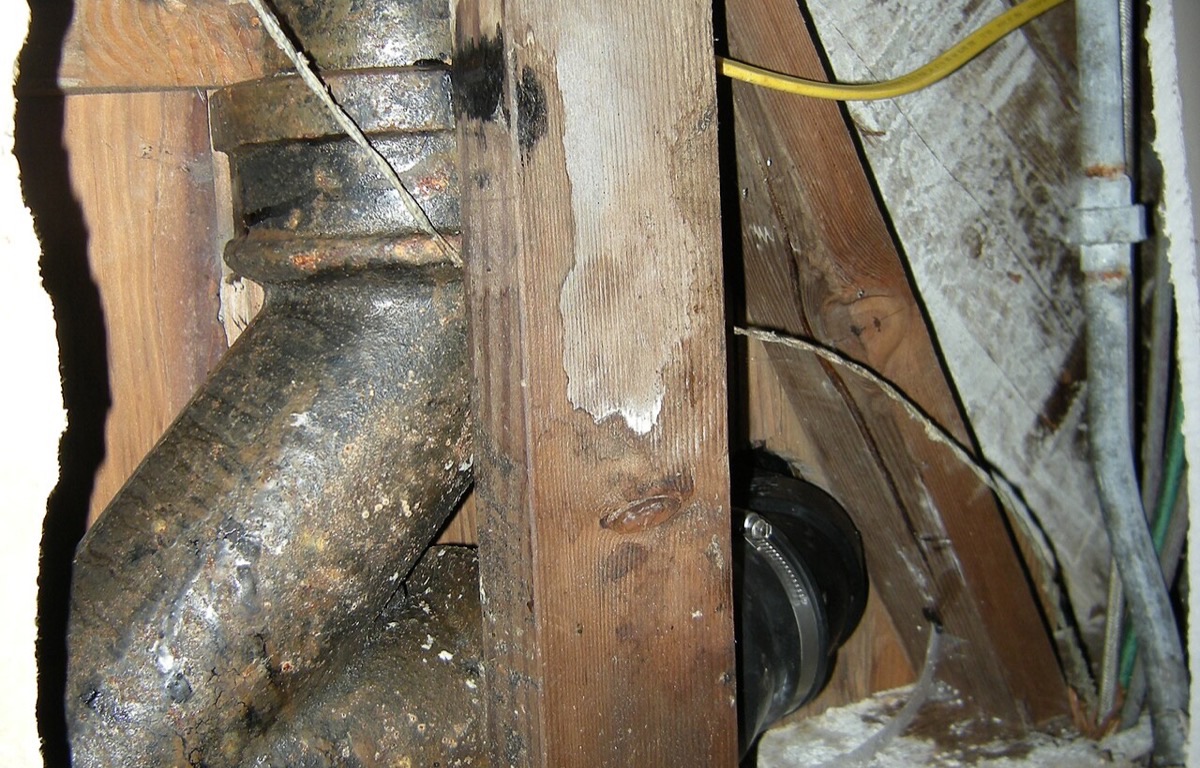

Record what triggers the sound, check visible fittings for leaks, and report new, severe, recurring, or water-related knocking rather than trying to secure concealed pipes yourself.
One brief tick after a pipe warms is different from a hard bang every time a tap closes. The sound may come from a pressure surge, a loose visible pipe, thermal expansion, a valve, a radiator, or a fitting inside the wall. You usually cannot identify the exact cause from the room side alone, but you can give maintenance a useful pattern.
Start with timing. Note which fixture was used, whether the sound occurred when water started or stopped, how long it lasted, and whether another room or neighbour heard it. For other moisture and home-condition symptoms, browse the damp and noise guide collection.
Do not remove wall panels, drill inspection holes, loosen pipe supports, or change water-pressure equipment in a rental. If you see a leak, a ceiling stain, or water near electricity, stop using the fixture and use the urgent repair route.
Record the trigger and the location
Keep a short note on your phone or paper. Write down the time, the fixture, the action, and the sound: “single knock when kitchen tap closes” is more useful than “pipes are noisy.” Stand in a safe dry area and listen at the wall, floor, ceiling, and nearby cabinet without pressing tools against the surface.
Record whether the sound began after a repair, a cold spell, a new appliance, or a change in water use.
A bang after a valve closes suggests a different path from a tick that continues while a radiator or hot pipe warms.
Look for drips, damp patches, corrosion, or a pipe that visibly moves. Do not pull on the pipe or remove a cover.
If the sound happens only once and there is no leak, keep documenting rather than repeatedly triggering it. If it is loud enough to shake a fitting, wake you, or occur after every use, report the pattern even if the wall looks dry.
Understand the common timing clues
A sharp bang immediately after a tap or valve closes can be consistent with water hammer, a pressure surge caused by a rapid change in water flow. Durham's water department describes water hammer as a banging or knocking sound created when water suddenly changes direction or stops, and notes that pressure, trapped air, fittings, or maintenance problems can contribute (Durham Water Management: Water hammer FAQ).
A series of ticks or snaps as hot water or heating starts may instead be pipe expansion against a support or building material. Older EPA noise guidance describes both water hammer and expansion or contraction as possible sources of plumbing noise, while noting that pipework is often inside walls and not accessible to a resident (US EPA: Quieting in the home).
These are clues, not a diagnosis. Use them to describe the timing and urgency, not to decide which hidden part to replace.
Make a low-risk visible check
Look beneath sinks, behind an accessible toilet, around a washing-machine hose, and near a radiator or exposed service pipe if those areas are dry and easy to reach. Check for a fresh drip, water mark, rust, swelling, or a fitting that moves when the fixture operates. Do not touch a hot pipe, electrical equipment, or a pressurized connection.
If the noise follows a toilet refill, dishwasher cycle or washing-machine valve, record that detail. Pressure controls and water-hammer arrestors are maintenance components inside the plumbing system, not renter adjustments.
Know when a pipe noise needs a report
Report the noise if it is new, increasing, repeated after every fixture use, accompanied by a leak or damp mark, linked to a radiator or boiler, or strong enough to move a visible pipe or fitting. Use the emergency maintenance route for active water, a ceiling stain that is growing, a burst pipe, or water near electricity.
Tell maintenance what you did not do as well: you did not open the wall, adjust a valve, or change pressure equipment. That reassures the inspector that the sound pattern has not been altered and helps them choose the right access point.
“There is a knocking sound at the [wall/ceiling/floor] near [room]. It happens when [the tap closes / the toilet refills / heating starts] and occurs [once / repeatedly]. I first noticed it on [date]. I can see [no water / a damp mark / a moving exposed pipe]. Please check the plumbing or heating system.”
Reduce disturbance while you wait
Use taps and appliances normally but avoid repeatedly cycling the fixture to reproduce a loud bang. Keep the area below a suspected leak clear and place a towel or bowl only where it is safe to do so. If the sound is from a shared wall, ask whether a neighbour has noticed the same pattern rather than entering another person's space.
For a move-out record, save one short audio clip only if it can be made safely and without opening panels. Add the date and trigger to the repair message. The move-out guide collection can help you keep a simple record of reported conditions.
Give maintenance a timing pattern
A wall noise becomes useful information when it has a trigger, location, and pattern. Record those three things, make only a visible dry check, and report leaks, severe sounds, or recurring knocks instead of opening the wall. Continue with the full guide library for the next everyday renting problem.
These links support specific safety, maintenance or jurisdiction examples in the article. General guidance cannot replace the instructions for the exact appliance, fitting, lease or location.