
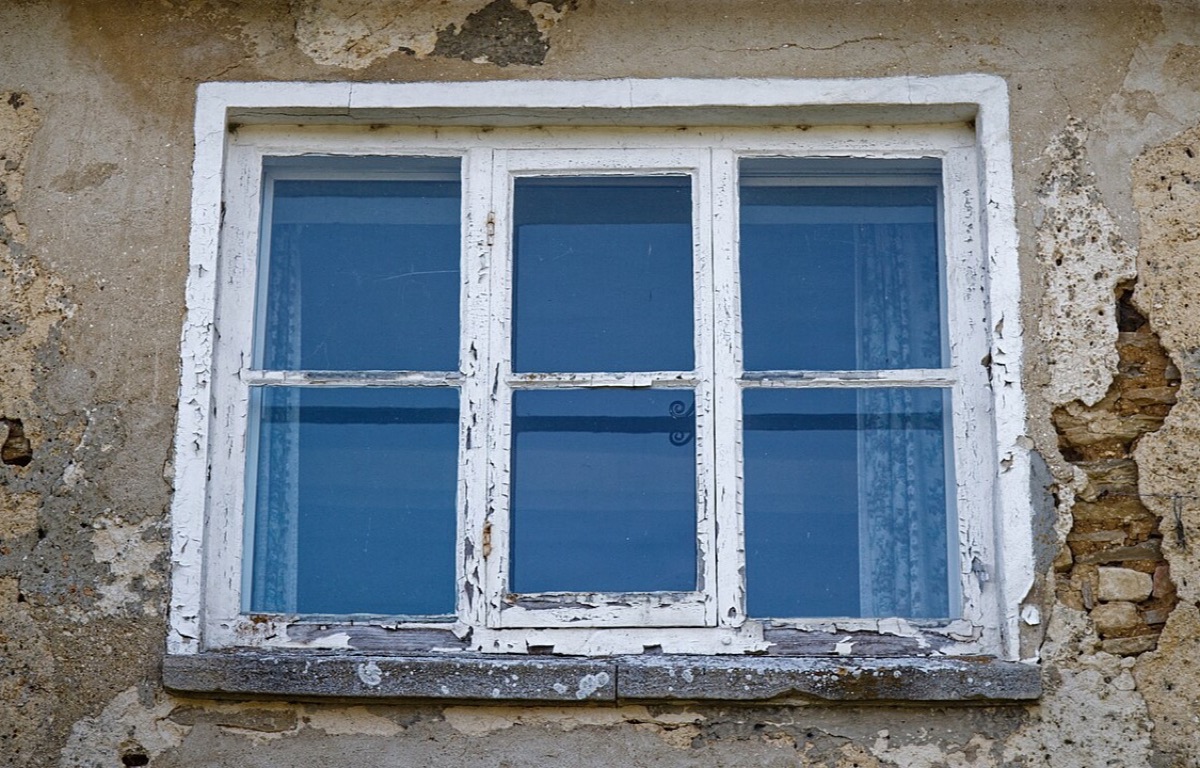

Check whether the paint is damp, soft or linked to rain and condensation, dry only surface moisture, and report recurring staining or peeling. Do not sand or repaint a damp reveal in a rental without permission.
Peeling paint around a window is a surface symptom, not a diagnosis. A cold room-side reveal can collect condensation; rain can enter around the frame; or a pipe, roof or wall defect can keep the plaster damp. If you repaint before finding the source, the new finish may bubble again and the original evidence may disappear.
Begin with a wide photo and a close-up of the edge. Do not scrape loose paint from a high window, seal drainage paths or apply filler over soft material. For water on glass, see the window-condensation guide.
If the building is older, paint is chalking heavily or flakes are falling, avoid dry sanding and ask the landlord about the approved repair method. Do not disturb suspect paint just to make the wall look tidy.
Find the pattern around the frame
Look at the top, sides and sill. Note whether the peeling is on the room side, the exterior-facing edge, the wall below the window or only on the glass-side trim. Check whether it appears after rain, cold nights, showering or cooking.
Include the whole window, then the peeling edge, staining and any swollen trim.
Press only lightly with a fingertip and stop if the plaster is soft, wet or crumbling.
A mark that grows after rain points to a different report than morning condensation.
Reduce ordinary surface moisture
Dry visible condensation from the sill, keep curtains from trapping wet air against the frame and use normal bathroom and kitchen ventilation. Move books, fabric and cardboard away from a damp reveal. These steps can limit surface moisture while maintenance investigates, but they do not repair rain entry or a cold bridge.
EPA guidance explains that controlling moisture, increasing ventilation and drying wet surfaces help reduce mold risk, while persistent leaks and dampness should be reported to the building owner or manager (US EPA: Ways to control moisture).
Why repainting is not the first repair
Paint can hide a stain for a short time without drying the wall. Sanding also creates dust and may remove sound material around a damaged edge. Do not use waterproof coating, filler, caulk or a heat gun to cover a peeling reveal unless the landlord approves the exact method.
If a tiny dry flake is already detached, leave it in place for the inspection or collect it carefully according to the property's instructions. Do not scrape a broad area, work above shoulder height or disturb a surface that may contain older paint layers.
Know when the window area needs maintenance
Report the area if paint continues to peel, the wall is soft, staining returns, mold appears, water follows rain, the trim swells, the frame is cracked or the window will not latch. Mention whether the moisture is on the glass, frame, reveal or wall below.
“Paint is peeling around the [bedroom/living-room] window at [top/sill/side/reveal]. It appears after [rain/cold nights/condensation/uncertain]. The area is [dry/damp/soft], and I photographed it before scraping or repainting.”
Keep the evidence clear for a visit
Leave the area accessible, keep the sill dry and do not place furniture directly against a damp wall. Keep dated photos with the repair reference. If the condition was present at move-in, compare the inventory before cleaning around it.
The move-out guide collection can help you separate a cosmetic cleaning task from a moisture issue that should remain visible and documented.
Keep the moisture pattern visible
Peeling paint needs a moisture pattern before it needs a new color. Photograph the area, dry only surface water, avoid sanding or sealing and report any soft, stained or recurring condition. Continue with the full guide library for the next window check.
These links support specific safety, maintenance or jurisdiction examples in the article. General guidance cannot replace the instructions for the exact appliance, fitting, lease or location.