
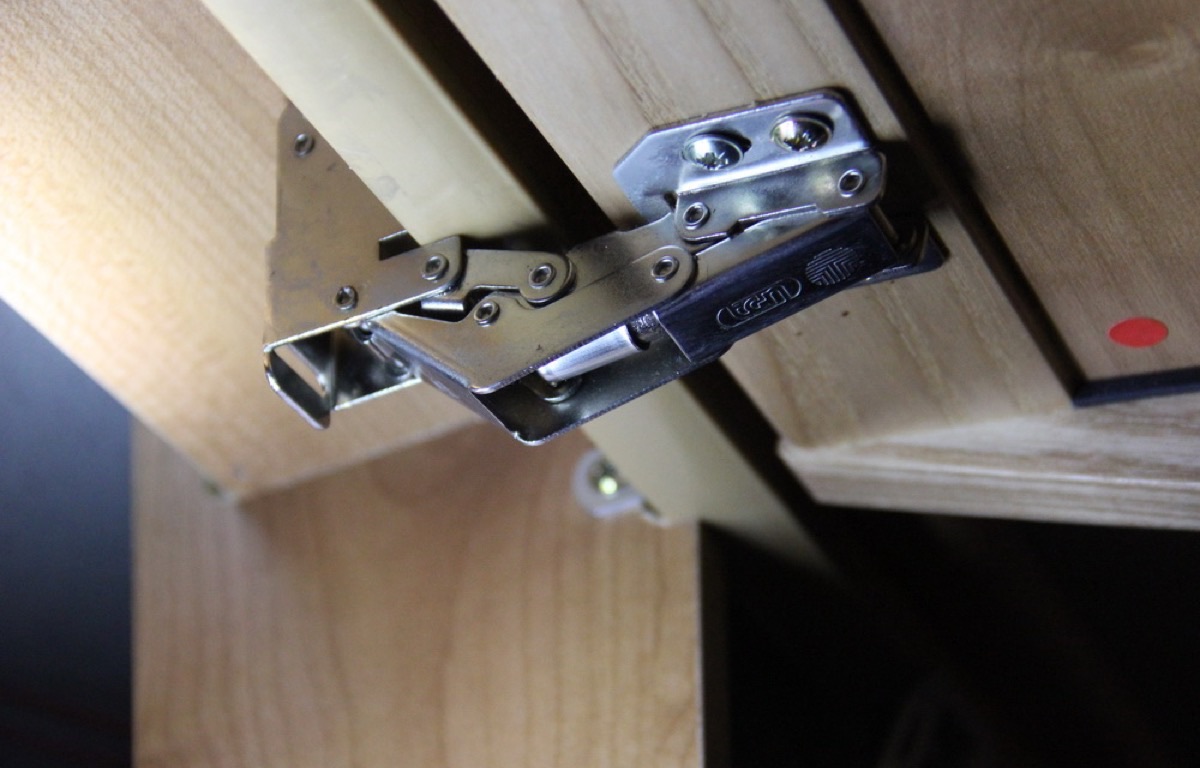

Support the door, photograph the hinge, tighten only an obvious loose fixing by hand, and stop if the mounting material is damaged or the door is heavy or unstable.
Cabinet hinges often allow several kinds of movement, so a crooked door does not automatically mean every screw needs adjustment. The visible hinge arm may control side-to-side or in-and-out position; the plate attached to the cabinet may control height. A loose plate or stripped chipboard is a different repair from a door that only needs alignment.
For a renter, make one reversible check only when the door is light, the screw head is obvious and the cabinet remains secure. IKEA's guidance notes that cabinet doors can be levelled using hinge screws, while cabinet manufacturers also warn that hinge types differ and that adjustment instructions should match the installed hardware (IKEA cabinet door adjustment guidance). For other kitchen hardware, browse the kitchen guide collection.
Do not remove a hinge screw from a heavy or tall door while holding it one-handed. If the cabinet side is swollen, cracked or pulling away, stop and report it.
Find out what is actually moving
Open the cabinet and hold the door gently at the handle side. Watch the hinge cup, arm, mounting plate and cabinet material as the door moves. If only an adjustment screw turns while the plate stays firmly attached, the door may be misaligned. If the plate moves with the screw, the fixing may be loose.
Show where the door rubs, drops or sits proud before making a change.
Use your free hand or a stable support; never let the door hang from a loose hinge.
Swelling, cracking or a screw that spins without biting is a report signal.
Make one gentle, reversible adjustment
Use a manual screwdriver that fits the screw. If a visible mounting screw is clearly loose and the cabinet material is firm, turn it only until snug while supporting the door. Close the door gently and check the gap. Do not use an impact driver or force a screw that is not turning cleanly.
If the hinge has labeled adjustment screws, change one direction at a time and make a small turn. Hinge designs differ, so use the installed product's instructions when available and reverse the change if the door moves the wrong way. Stop if a screw binds, spins or pulls the mounting plate away from the cabinet.
Know when the cabinet needs maintenance
Stop and report the cabinet if the door is heavy, the hinge is cracked, the plate pulls away, the screw hole is enlarged, the cabinet side is swollen, the door will not stay attached, or the adjustment needs force. Also report a cabinet above a cooker or sink that could fall into a work area.
Do not fill a damaged screw hole with household filler, move the hinge cup, drill a new hole or replace a hinge with a different type without permission. Those changes can affect door alignment, safety and the cabinet's original fixing points.
Keep the hinge from loosening again
Close cabinet doors by the handle, not by pushing a corner. Keep heavy items from pressing against the inside of the door and wipe standing water from the sink-side cabinet. If the door becomes crooked again quickly, report the recurrence rather than tightening it repeatedly.
For a move-out record, take an after photo only if the door remains secure and closes normally. The move-out guide collection can help you document small hardware changes alongside the kitchen handover.
Leave the door stable and supported
A cabinet door needs a diagnosis before it needs a screwdriver. Photograph the gap, support the door, make one small adjustment only when the fixing is sound, and hand back swollen, stripped or unstable hardware to maintenance. Continue with the full guide library for the next kitchen repair.
These links support specific safety, maintenance or jurisdiction examples in the article. General guidance cannot replace the instructions for the exact appliance, fitting, lease or location.