
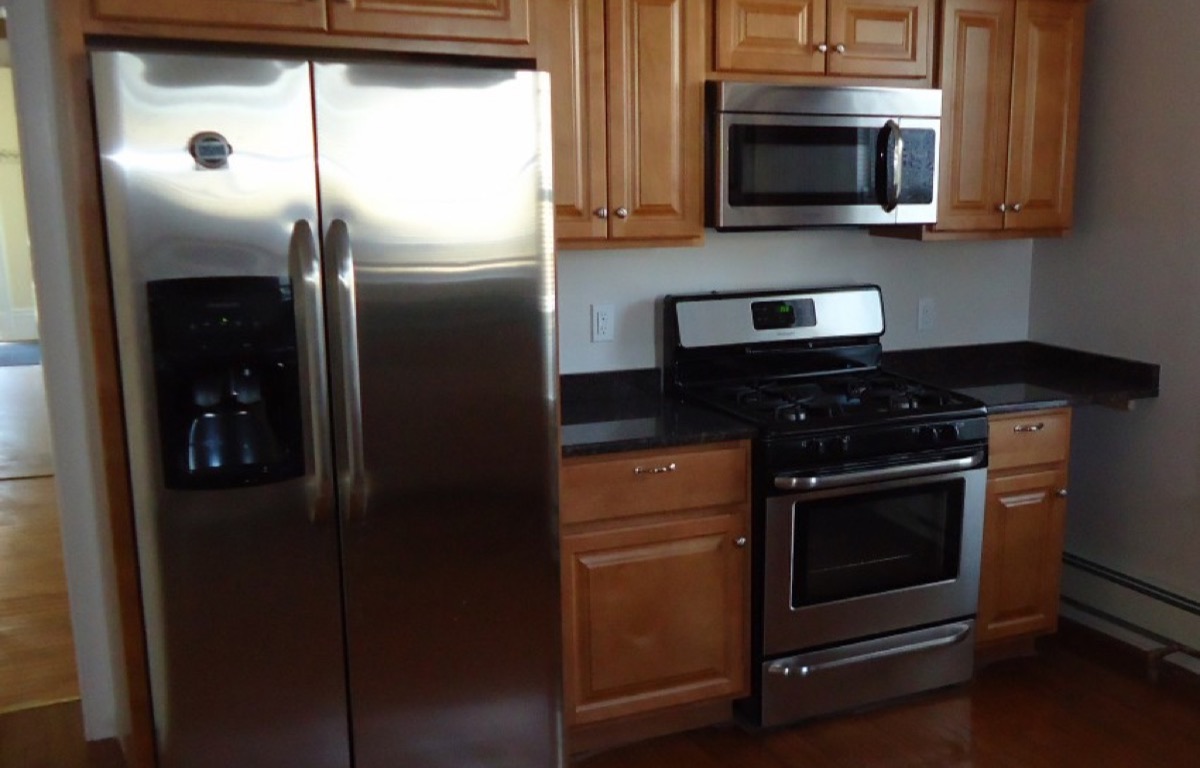

Dry the floor, check the door seal and visible water line from a safe position, and record whether the leak follows a defrost cycle or water dispenser use. Do not pull a heavy refrigerator forward or disconnect a pressurized line yourself.
A puddle beside the refrigerator is easy to blame on the appliance, but water can also run from the sink, dishwasher or a cabinet and collect under the same footprint. The useful first clue is timing: does it appear after the ice maker runs, after the door has been open, after a defrost cycle or after nearby kitchen use?
Start from a dry floor and the visible front edge. Do not remove the rear panel, tip the appliance or disconnect a water line without permission. For related kitchen leaks, see the water-under-the-sink guide.
If water is near the plug, outlet or an exposed cable, do not reach behind the refrigerator. Step back and contact maintenance or a qualified electrician.
Record when the water appears
Wipe the floor dry and place a clean paper towel at the front corners of the appliance. Note whether it becomes wet after normal door use, a dispenser cycle, an ice-making cycle or nearby sink and dishwasher use. Do not keep running an appliance cycle just to recreate the leak.
Look for a wet trail leading from the sink, dishwasher or cabinet rather than assuming the refrigerator is the source.
Look for a torn gasket, food debris or a door that does not close squarely.
Water under the appliance may have travelled from a higher connection or a nearby spill.
Check only what is visible
Look at the front edge, the door seal, the water-dispenser area and any exposed supply tube without pulling the appliance. A damaged seal can allow condensation or warm air into the cabinet, but it does not explain every puddle. A wet line at a visible connection should be photographed and reported.
ENERGY STAR's refrigerator guidance emphasizes keeping door seals clean and intact so the appliance can close properly and operate efficiently (ENERGY STAR refrigerators). Cleaning crumbs from a gasket is a low-risk check; removing panels or adjusting the refrigerant system is not.
Why moving the refrigerator is not a first step
Refrigerators are heavy, can scratch flooring and may have a water line or anti-tip fitting behind them. Pulling one forward can kink the line, strain the plug or damage the floor. If the appliance must be moved for inspection, ask maintenance or the appliance provider to do it.
Do not use a towel or tray to hide recurring water, and do not seal around the base. Those actions can keep the floor damp and make the original source harder to find.
Know when the appliance needs a repair report
Report the refrigerator if water returns after drying, the floor or cabinet base swells, the door will not seal, the ice-maker or dispenser line leaks, the appliance makes an unusual sound, or food is not staying cold. Use the urgent route for water near electricity or a steady supply-line flow.
Include the appliance position, timing, photos, whether the water appears after dispenser or ice use, and whether nearby fixtures were used at the same time. This helps maintenance separate an appliance leak from a kitchen plumbing leak.
“Water appears under the refrigerator in the [kitchen]. It happens after [ice/dispenser use/defrost/nearby sink use/uncertain]. I dried the floor and placed paper towels at the front edge. The door seal is [intact/damaged], and I have not moved or disconnected the appliance.”
Keep the floor and food safe while you wait
Keep the floor dry, move cardboard or fabric away from the wet area and avoid storing items against the appliance base. If the refrigerator is not keeping food cold, follow the appliance manual and food-safety guidance rather than repeatedly opening the door to test it.
For a move-out record, keep the dated photos and repair reference. The move-out guide collection can help you record appliance conditions without trying to conceal water damage.
Track the timing without moving the appliance
Water under a refrigerator needs a timing clue before it needs a heavy appliance moved. Dry the floor, check the seal and visible connections, keep electricity and water apart and let maintenance handle the back or supply line. Continue with the full guide library for the next kitchen check.
These links support specific safety, maintenance or jurisdiction examples in the article. General guidance cannot replace the instructions for the exact appliance, fitting, lease or location.