
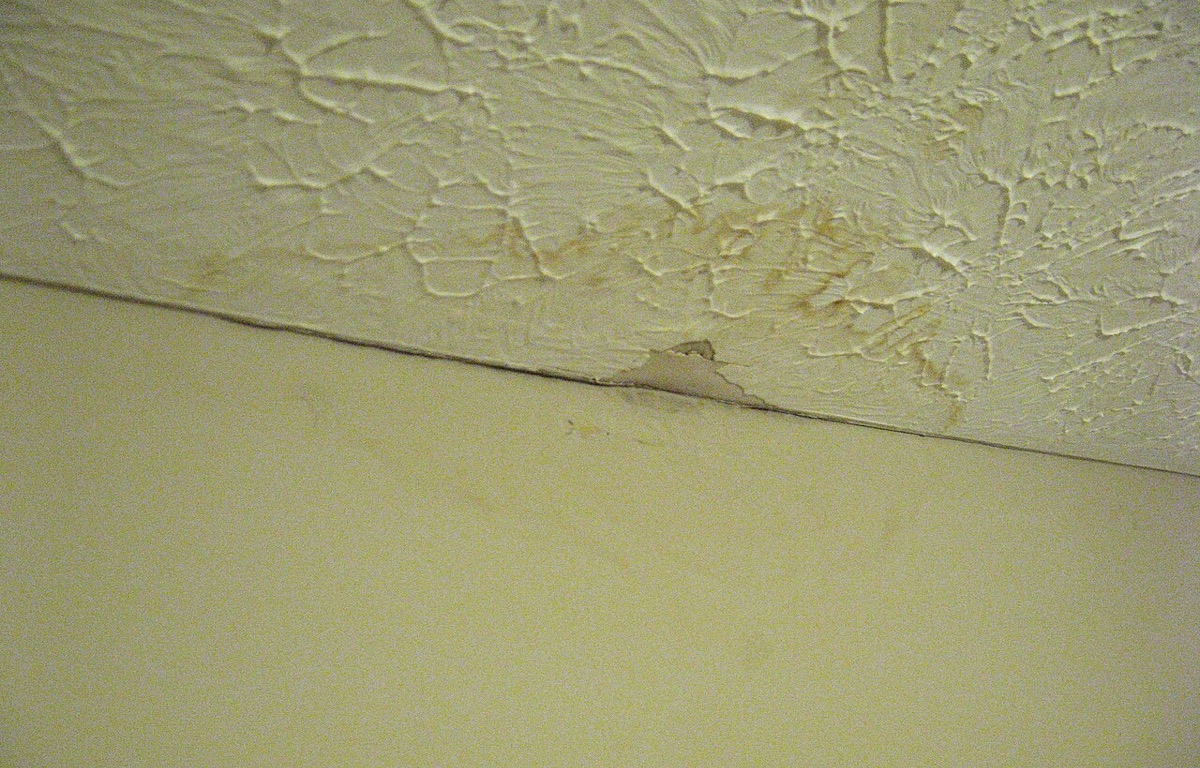

Record the stain before touching it, keep people and electrical equipment away from active water, and report whether it changes after rain. Do not puncture, paint or seal a damp ceiling yourself.
A brown or yellow ceiling mark is not proof of one particular leak. Water may enter from above, travel along a beam, come from a bathroom or pipe, or collect through condensation. Rain timing is valuable because it can help maintenance compare the stain with weather and other reports.
Start from the floor and keep your inspection conservative. Do not climb to the stain, cut an inspection hole or press a swollen ceiling. For related moisture symptoms, see the window-condensation guide.
If water is dripping near a light, smoke alarm, outlet or visible wiring, do not touch the fixture or enter standing water. Move away and use the urgent maintenance or electrical-safety route.
Photograph the stain before cleaning
Take one wide photo showing the room and one close photo showing the edge, color and any bubbling paint. Note the date, recent weather and whether the mark was present before the rain. Keep furniture and belongings away from the area if water is continuing.
Look for drips, sagging, cracks or wet paint without using a chair or ladder.
Note whether the stain sits below a bathroom, roof edge, window or pipe route.
Write down whether the mark grows, dries or stays unchanged over the next day.
Keep the room safe
Put a container under a small drip only if it can sit safely away from electrics, and place a towel around—not over—electrical equipment. Do not touch a wet light fitting, remove a smoke alarm or switch off a circuit while standing in water.
CDC guidance on electrical hazards advises avoiding standing water around electrical equipment and having wet equipment assessed before reuse (CDC electrical-safety guidance). The safest renter contribution is a clear report and a dry, accessible area.
Separate rain timing from ordinary humidity
Condensation is more likely when the mark appears in a humid room without rain and around cold corners or windows. A stain that grows after rainfall, appears near an exterior wall or continues when the room is dry needs a building or plumbing inspection.
Do not use a dehumidifier or fan to hide a growing stain. Air movement may dry the surface while water remains inside the ceiling. Leave the pattern visible for maintenance to assess.
Know when to report urgently
Use the urgent route for active dripping, a bulging or sagging ceiling, water near electrics, a spreading stain, a strong musty smell or water running through a light fitting. Report a stable stain promptly as well, especially if it returns after rain or has damaged paint and plaster.
“A ceiling stain appeared in the [room] after rain on [date]. It is [dry/damp/dripping], approximately [size], and sits below [window/bathroom/roof area/uncertain]. The edge is [stable/bubbling/sagging]. I photographed it and have not painted or punctured the ceiling.”
Keep the evidence and belongings protected
Move furniture and fabrics away from the stain, keep the floor dry and leave access for an inspection. Do not place a box over the area or repaint it between visits. Keep weather notes, dated photos and the repair reference together.
If the stain is part of a move-out inspection, keep it visible and link it to the repair request. The move-out guide collection can help you document existing conditions without disguising them.
Preserve the rain-and-stain record
A ceiling stain needs a date, a weather pattern and a safe photo before it needs paint. Keep away from active water and electrics, document the edge and report any growth, sagging or return after rain. Continue with the full guide library for the next moisture check.
These links support specific safety, maintenance or jurisdiction examples in the article. General guidance cannot replace the instructions for the exact appliance, fitting, lease or location.