
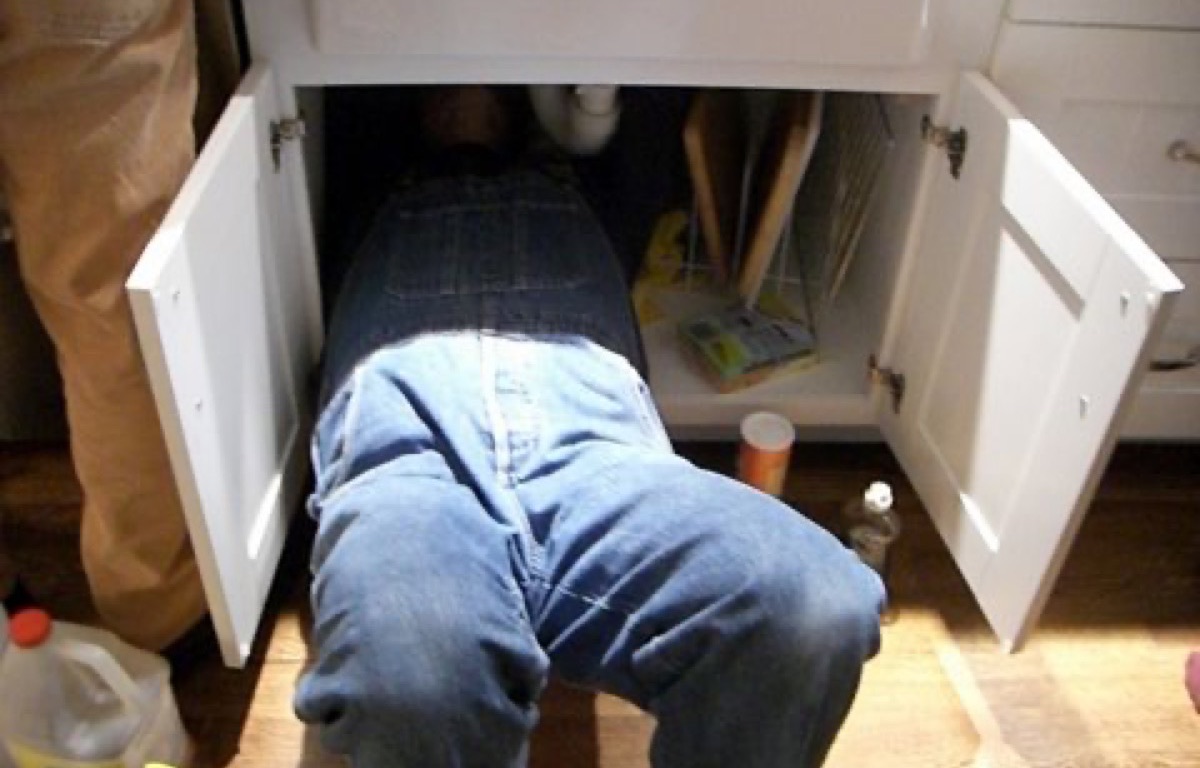

Dry the cabinet, check the sink and appliance connections without dismantling them, photograph the swelling and report any dampness, smell or returning water. Do not sand, fill or seal swollen board as a cosmetic fix.
Swollen chipboard or laminate at the bottom of a cabinet is a record of moisture, even when the visible puddle has disappeared. Water may have come from a sink trap, faucet hose, dishwasher connection, cleaning spill or condensation around a cold pipe. The base can remain distorted after the source is dry, so the shape alone does not identify the leak.
Start with an empty, dry cabinet and a photo. Do not remove pipework, cut the base or paint over the swelling. For the first leak check, use the water-under-the-sink guide.
Remove cardboard, food packaging and fabric from the cabinet. If water is near an appliance socket or disposal unit, do not reach into it; contact maintenance or an electrician.
Empty and photograph the cabinet
Remove bottles, liners and stored items carefully. Take a wide photo of the cabinet and close photos of swollen edges, stains, mold, rust or a wet shelf. Note whether the base is firm, soft, cracked or visibly higher at one corner.
Use a towel and leave the doors open so air can circulate. Do not cover the base while it is damp.
Check the sink underside, supply hoses, shut-off valves and appliance connections from a dry position.
Place a clean paper towel below a visible joint and inspect it after normal sink use.
Separate a leak from a splash or spill
Water that appears when the tap runs points you toward supply or drain connections. Water that appears only when the dishwasher runs suggests the appliance hose or waste connection. A base that is dry but permanently swollen may be old damage, but it still belongs in the record.
EPA WaterSense recommends checking pipe connections, puddling and water spots under sinks and identifying the leak source before choosing a repair (US EPA WaterSense home maintenance). That is a useful renter sequence even when the material is already damaged.
Why cosmetic patching can make the problem worse
Do not sand swollen board flat, inject glue, spread filler, apply waterproof coating or replace the shelf liner to hide the shape. These changes can trap moisture, release dust or make it harder to see whether the base is still moving.
If the cabinet is supplied with the rental, ask before replacing any shelf or panel. A replacement may need to match the original material and may not address the leak behind it.
Know when the cabinet needs maintenance
Report the cabinet if the base is soft, moldy, wet, strongly musty, still swelling, connected to a continuing drip or close to electrical equipment. Report any leak that returns after drying, even if the cabinet appears usable.
“The cabinet base under the [sink/dishwasher] is [swollen/soft/stained]. Water appears [when the tap runs/when the appliance runs/uncertain], and the highest wet point is [location]. I emptied and dried the cabinet and photographed it without sanding or sealing the board.”
Keep the cabinet dry while you wait
Leave the doors open if safe, keep stored items off the base and wipe water from the sink area promptly. Do not place a mat, cardboard box or shelf liner over a damp section. Keep the cabinet accessible for inspection.
For move-out documentation, retain the first photo, the repair message and any after photo taken when the cabinet is dry. The move-out guide collection can help you record the condition honestly.
Dry the space without hiding the damage
A swollen cabinet base is evidence before it is a cosmetic project. Empty it, dry it, trace visible water paths and report the material without sanding or sealing it. Continue with the full guide library for the next kitchen check.
These links support specific safety, maintenance or jurisdiction examples in the article. General guidance cannot replace the instructions for the exact appliance, fitting, lease or location.